07 Mar 2022
Kredis is a new gem that makes it easier to work with Redis keys in Ruby on Rails. Kredis was added a suggested gem for new Rails applications starting with the release of Rails 7.0 in December of 2021 and is likely to become a larger force in the Rails world in the coming years.
From the documentation, Kredis “encapsulates higher-level types and data structures around a single key, so you can interact with them as coherent objects rather than isolated procedural commands”.
What this means for us is that we can use Kredis to make it easier to use Redis as a data store in our application. With Kredis, it is simple to use Redis to read and write complex data structures. Kredis’ integration with ActiveRecord allows us to work with Redis data alongside existing models.
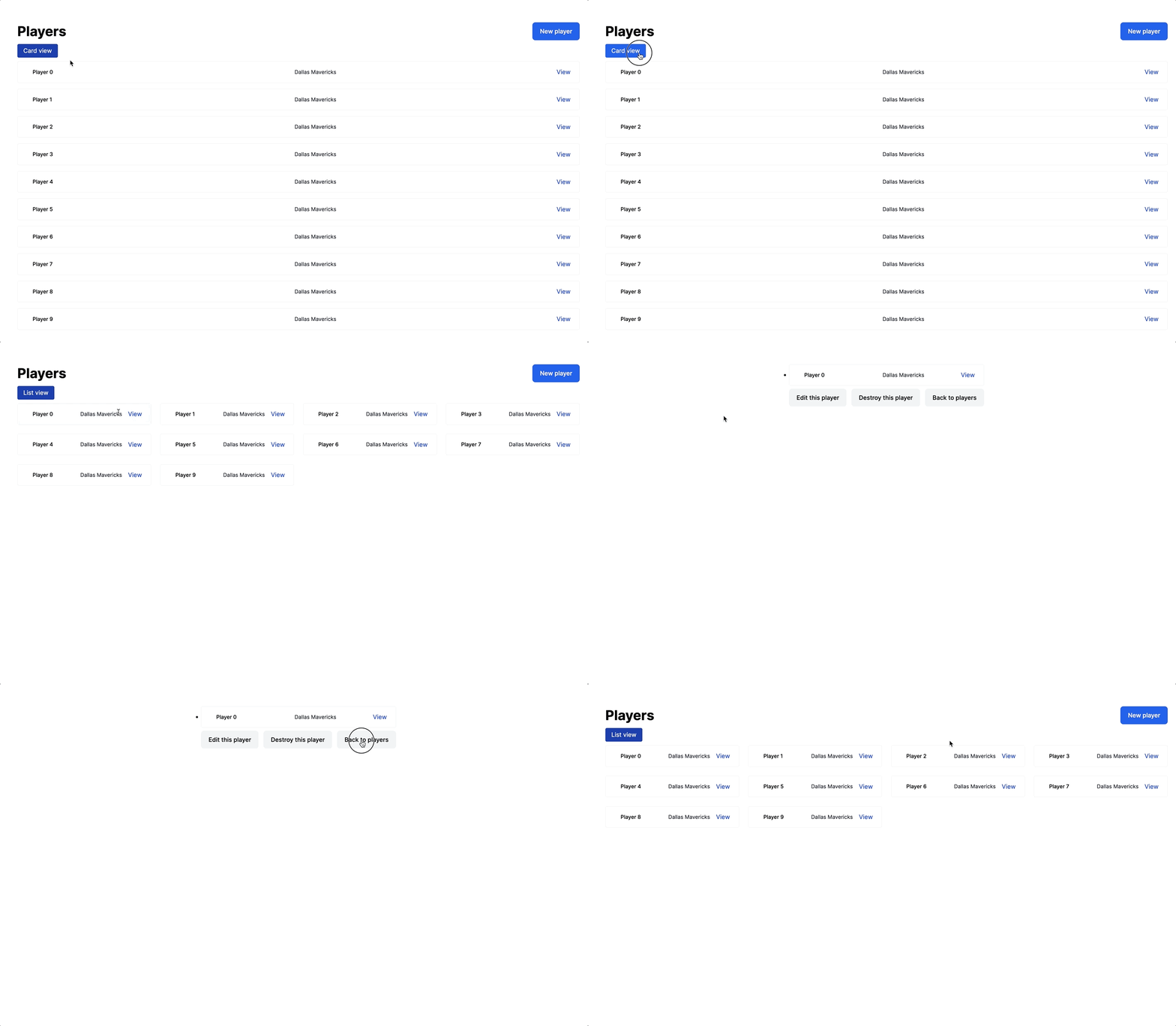
Today we will use Kredis to power a card/list view toggle for a resource’s index page, persisting the user’s view preference across requests. This tutorial will offer a gentle introduction into how Kredis works while exploring how Kredis can help us implement a common real-world UX pattern.
We will also add a bit of Turbo functionality in the form of a Turbo Frame to wrap the list of items to make applying the user’s view preference a bit more efficient.
When we are finished, our application will work like this:
Before we begin, this tutorial is best suited for folks with experience building simple applications with Ruby on Rails. If you have never used Rails before, this tutorial will be difficult to follow. You do not need any prior experience with Turbo or Kredis to follow along with this tutorial.
As usual, you can find the complete code for this application on Github.
Let’s start building.
Read the rest
25-minute read
02 Mar 2022
This newsletter went out via email to the Hotwiring Rails subscriber list, but I know that not everyone wants another email cluttering up their inbox. For those folks, I’ll always publish the full content of the newletter here too, so you can get all the content with none of the emails.
Thoughts or feedback on how I can make this newsletter more valuable? Have something you’d like to include in next month’s edition? Send me an email, or find me on Twitter.
Read the rest
Six-minute read
11 Feb 2022
When Rails 7 released in December, Turbo became a default component of all new Ruby on Rails applications. This was an exciting moment for Rails developers that want to use Rails full-stack — especially folks on small teams with limited resources to pour into building and maintaining a React or Vue frontend.
Along with that excitement has come a constant stream of developers trying to learn how Turbo works, and how to integrate it into their Rails applications successfully.
For many, that learning journey has included a lot of roadblocks — Turbo requires some changes to how you structure applications and the official documentation is not yet as detailed as it could be. The good news is, most folks hit the same roadblocks early on their journey, which means we can help folks faster by addressing the common points of confusion.
In particular, there is confusion about how to use Turbo Frames and Turbo Streams together, and confusion about how Turbo Streams work.
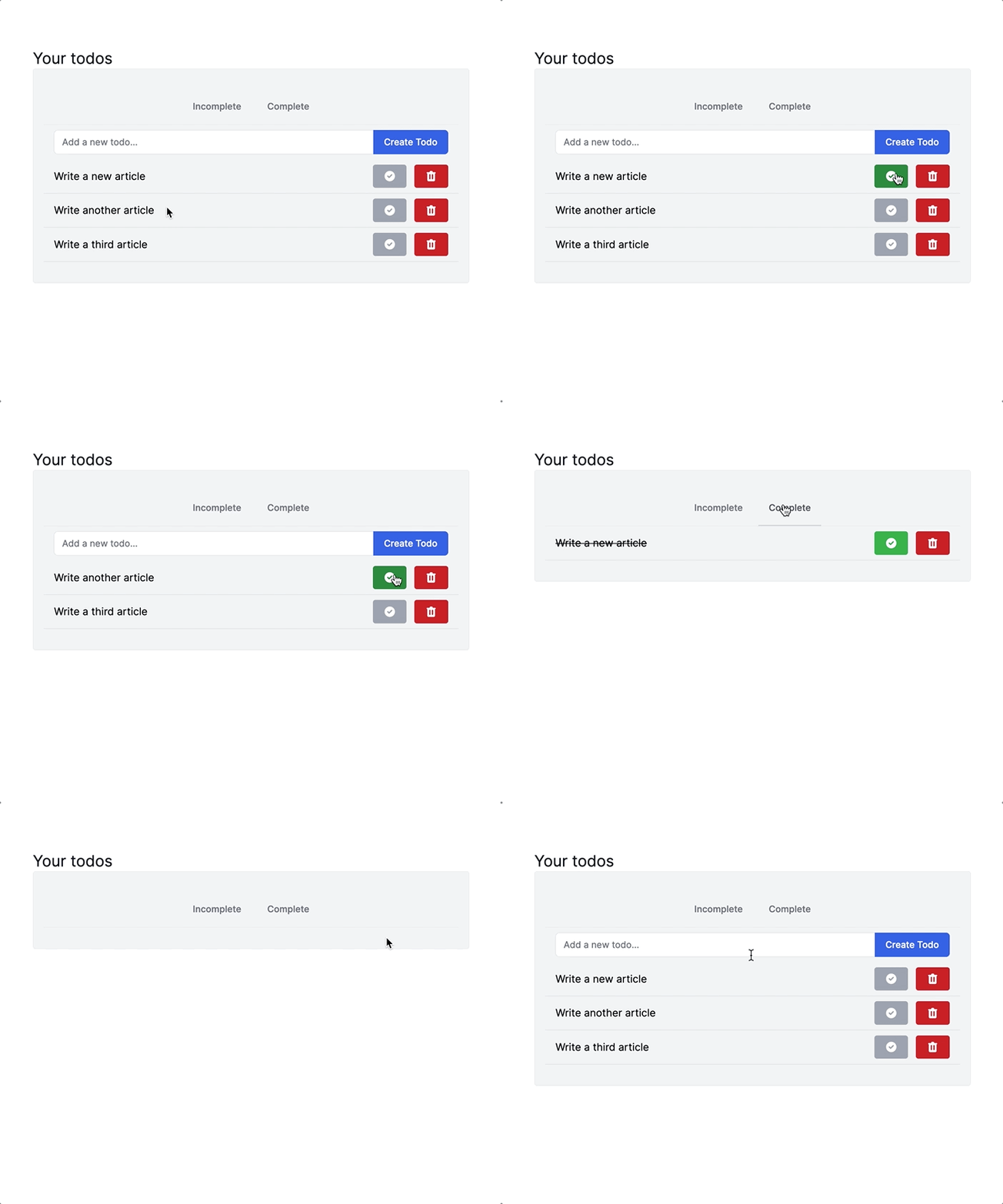
Today, we are going to build a simple todo list application, powered entirely by Turbo. While building, we will take a few detours to look more deeply at a few common Turbo behaviors, and we will directly address two of the most common misconceptions that I see from folks who are brand new to using Turbo in their Rails applications.
When we are finished, our application will work like this:
This tutorial is written for Rails developers who are brand new to Turbo. The content is very much Turbo 101 and may not be useful if you are already comfortable working with Turbo Frames and Turbo Streams. This article also assumes comfort with writing standard CRUD applications in Rails — if you are have never used Rails before, this is not the right place to start!
As usual, you can find the complete code for our demo application on Github.
Let’s start building!
Read the rest
37-minute read