Pagination and infinite scrolling with Rails and the Hotwire stack

September 2022 Update: The techniques described in this article still work. However, with the release of Turbo 7.2, there is a simpler approach than the technique used in this article. You can find an updated version of this article here.

Nearly every web application will eventually need to add pagination to improve page load times and allow users to process information in a more consumable way — you don’t want to load 1,000 records in one request!

Today, we are going to use the Hotwire stack (Turbo and Stimulus) to implement pagination in a Ruby on Rails application. We will implement pagination in three different ways, to give ourselves a chance to explore Turbo Frames, Turbo Streams, and Stimulus.

This article was inspired by a conversation on the StimulusReflex discord and the great article by Dale Zak published as a result of that conversation.

In Dale’s article, a purpose-built Stimulus controller is used to respond to a GET request with a Turbo Stream template. After reading that article, I decided to explore another method for achieving the same result, which is what we will tackle today.

In the article, we will start with a simple Rails 7 application, build standard pagination with Pagy, and then layer on three different implementations of Turbo-powered pagination:

  • Pagination with Previous and Next page buttons
  • Manual “infinite scroll” with a load more button
  • Automatic infinite scroll

When we are finished, the infinite scroll version will look like this:
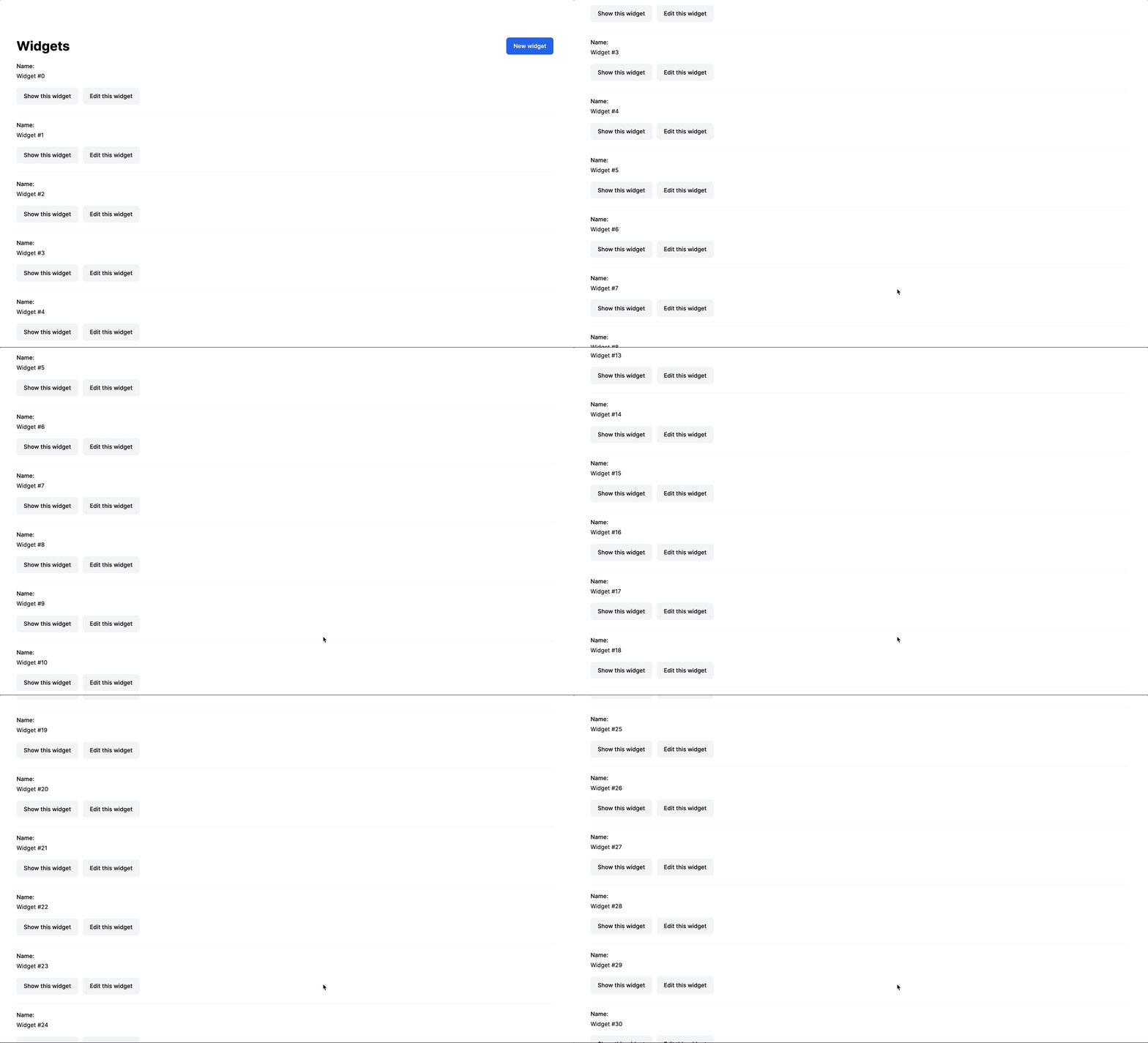
A screen recording of a user on a web page that displays a list of widgets. As the user scrolls, new widgets are appended to the bottom of the list.

Before we begin, this article assumes that you are comfortable with Ruby on Rails and you have had a bit of exposure to Turbo and Stimulus. The techniques described in this article will work without Ruby on Rails, but the code will be easiest to follow if you are comfortable developing simple Ruby on Rails applications.

You can find the complete code for this tutorial on Github, and you can try out a “production” version of the application on Heroku.

Let’s get started!

Read the rest 24-minute read

Real-time previews with Rails and StimulusReflex

Today we are going to build a live, server-rendered, liquid-enabled markdown previewer with Ruby on Rails and StimulusReflex. It’ll be pretty neat.

Allowing users to preview their content before saving it is a common need in web applications — posts, products, emails. Any user-created content that gets turned into HTML can benefit from a preview function to help users check their work before they save it.

Our StimulusReflex-powered previewer will parse user-generated markdown on the server, insert dynamic content with liquid, and update the DOM in ~100ms, fast enough that the preview feels instant.

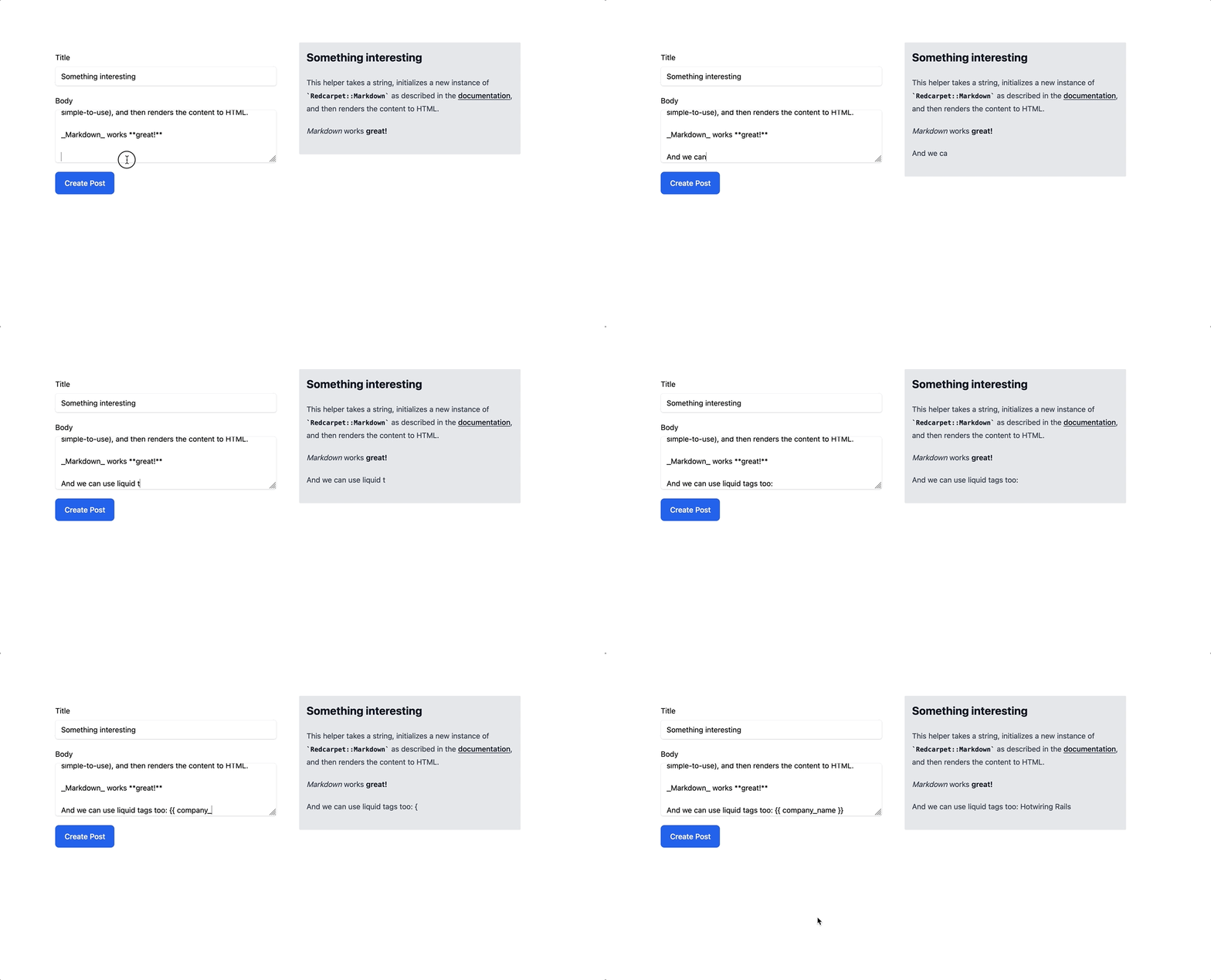
When our work is done, the end product will look like this:

A screen recording of a user typing into a form on a web page. As they type, what they type is displayed in a box beside the form input, with markdown formatting applied.

If you’d like to try out the previewer in a production environment, you can try it out on Heroku. The demo application is hosted on Heroku’s free tier so expect a delay on the first page load!

Before diving in, this tutorial assumes a basic level of Rails knowledge. If you have never written Rails before, this tutorial may not be for you. You do not need any prior experience with Stimulus or StimulusReflex to follow along — in fact, this tutorial will be most useful to you if you are new to StimulusReflex and curious about how it can help you build great experiences faster.

Let’s get started!

Read the rest 28-minute read


Hotwiring Rails Newsletter - January 2022

This newsletter went out via email to the Hotwiring Rails subscriber list, but I know that not everyone wants another email cluttering up their inbox. For those folks, I’ll always publish the full content of the newletter here too, so you can get all the content with none of the emails.

Thoughts or feedback on how I can make this newsletter more valuable? Have something you’d like to include in next month’s edition? Send me an email, or find me on Twitter.

Read the rest Five-minute read